🌱 GENERAL LANDSCAPING QUESTIONS
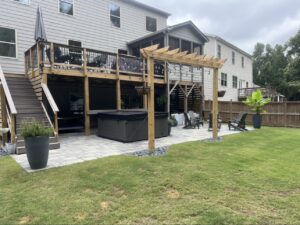
Lawn Frogs Landscaping Backyard Makeover & Patio Installation Dallas, Ga
1. What does a landscaping company do?
A landscaping company designs, installs, maintains, and improves outdoor spaces. This includes lawn care, landscape design, plant installation, hardscaping (pavers, patios, retaining walls), drainage solutions, pruning, and seasonal cleanups. Professional landscapers also understand soil health, grading, and long-term plant care, which DIY approaches often overlook.
2. How much does professional landscaping cost?
Landscaping costs vary based on property size, scope of work, materials, and site conditions. Basic lawn maintenance is typically lower cost, while projects like sod installation, drainage correction, or paver patios require more labor and materials. Professional landscaping focuses on long-term value, not short-term fixes.
3. Is landscaping worth the investment?
Yes. Quality landscaping can increase property value by 10–15%, improve curb appeal, reduce maintenance issues, and make outdoor spaces more usable. Well-planned landscapes also help with drainage, erosion control, and energy efficiency by reducing heat around the home.
4. How do I choose the right landscaping company?
Look for experience, insurance, local knowledge, clear communication, and consistent reviews. A reliable local landscaper should provide a clear estimate, explain the process, and recommend solutions—not upsell unnecessary services.
5. What is included in full-service landscaping?
Full-service landscaping typically includes lawn maintenance, landscape design, plant installation, mulch or pine straw, hardscaping, drainage solutions, pruning, and seasonal cleanups. Some companies also offer ongoing property management plans.
6. What is the difference between landscaping and lawn care?
Lawn care focuses on turf health—mowing, fertilization, weed control, aeration—while landscaping includes the entire outdoor environment, including plants, trees, hardscapes, and drainage systems.
7. How long does a landscaping project take?
Project timelines vary. Lawn maintenance is ongoing, sod installation often takes 1–2 days, and hardscaping projects can take several days to weeks depending on complexity. Weather and site conditions also affect timelines.
8. Can landscaping increase home value?
Yes. Landscaping is one of the highest ROI home improvements. Features like healthy lawns, defined walkways, outdoor living spaces, and proper drainage make homes more attractive to buyers.
9. Do landscapers offer free estimates?
Most reputable landscaping companies offer free consultations or estimates so homeowners can understand scope, pricing, and options before committing.
10. What questions should I ask a landscaper before hiring?
Ask about experience, insurance, maintenance plans, warranties, timelines, and how issues like drainage or soil conditions will be handled.
11. Is landscaping tax deductible?
Residential landscaping is typically not tax deductible, but certain improvements for rental properties or erosion control may qualify. Always consult a tax professional.
12. How often should landscaping be maintained?
Most landscapes need weekly or bi-weekly maintenance during the growing season and seasonal cleanups in spring and fall to stay healthy and attractive.
13. What is considered hardscaping vs softscaping?
Hardscaping includes non-living elements like pavers, patios, retaining walls, and walkways. Softscaping includes plants, grass, trees, and soil.
14. How do I plan a landscaping project?
Start with goals, budget, and how you want to use your outdoor space. A professional landscaper evaluates drainage, soil, sunlight, and layout before recommending solutions.
15. What landscaping services are best for curb appeal?
Lawn maintenance, clean edging, mulch or pine straw, trimmed shrubs, and defined walkways offer the fastest curb appeal improvements.
16. Can landscaping help with drainage issues?
Yes. Professional grading, French drains, catch basins, and plant placement can redirect water and prevent flooding or erosion.
17. What is sustainable landscaping?
Sustainable landscaping uses efficient irrigation, native plants, proper soil management, and minimal chemical use to reduce environmental impact.
18. What is low-maintenance landscaping?
Low-maintenance landscaping focuses on durable plants, proper spacing, mulch, and efficient layouts that reduce watering, pruning, and upkeep needs.
19. How much maintenance does landscaping require?
Maintenance depends on plant selection and design. Proper planning significantly reduces long-term effort and costs.
20. What landscaping services are most popular?
Lawn maintenance, sod installation, drainage solutions, paver patios, and seasonal cleanups are among the most requested services.
21. Do landscapers provide design services?
Many professional landscapers provide layout planning and design recommendations to ensure long-term success.
22. What landscaping improvements add the most value?
Healthy lawns, drainage correction, outdoor living areas, and defined borders add the most functional and visual value.
23. What is the best time of year to landscape?
Spring and fall are ideal for most projects, though many services can be performed year-round in Georgia.
24. How often should landscaping be updated?
Most landscapes benefit from updates every 5–10 years as plants mature and homeowner needs change.
25. Can landscaping help with erosion control?
Yes. Proper grading, plant roots, retaining walls, and ground cover help stabilize soil and prevent erosion.
🌿 LAWN CARE & GRASS QUESTIONS
26. How often should a lawn be mowed?
Weekly during peak growth, less frequently during cooler seasons.
27. What is the best grass for Georgia lawns?
Bermuda, Zoysia, Fescue (shade), and Centipede are common choices.
28. Why is my lawn turning yellow?
Yellowing can be caused by poor soil, improper watering, nutrient deficiency, or disease.
29. How do I get rid of weeds in my lawn?
Consistent mowing, proper fertilization, and professional weed control prevent weed growth.
30. How often should I water my lawn?
Most lawns need about 1 inch of water per week, including rainfall.
31. What time of day should I water my lawn?
Early morning is best to reduce evaporation and disease risk.
32. How do I fix bare spots in my lawn?
Aeration, overseeding, or sod installation may be required depending on severity.
33. What causes brown patches in grass?
Heat stress, fungus, pests, or improper mowing height are common causes.
34. Is fertilizing really necessary?
Yes. Fertilization replenishes nutrients essential for healthy growth.
35. How often should I fertilize my lawn?
Typically 2–4 times per year depending on grass type.
36. What is lawn aeration and why is it important?
Aeration relieves soil compaction and allows water, nutrients, and air to reach roots.
37. How often should a lawn be aerated?
Once per year is common for most lawns.
38. What is overseeding?
Overseeding adds grass seed to existing lawns to improve density.
39. Should I seed or sod my lawn?
Sod provides immediate results; seed is more economical but slower.
40. What grass grows best in shaded areas?
Fescue performs best in shaded conditions.
41. How short should grass be cut?
Never remove more than one-third of the blade height at once.
42. Can mowing too short damage grass?
Yes. Scalping stresses grass and encourages weeds.
43. Why does my lawn grow unevenly?
Uneven growth often results from soil compaction or drainage issues.
44. How do I improve poor soil for grass?
Soil amendments, aeration, and proper fertilization help restore soil health.
45. How long does it take for grass to grow?
Seed can take weeks; sod establishes in 4–6 weeks.
46. How do I prevent weeds naturally?
Healthy turf, proper mowing, and dense grass coverage suppress weeds.
47. What is the best lawn care schedule?
A seasonal plan based on grass type and climate is most effective.
48. Can lawn care help prevent pests?
Healthy lawns are more resistant to insect damage.
49. What lawn problems are common in Georgia?
Heat stress, weeds, compacted soil, and drainage issues.
50. When should I stop mowing for the season?
When grass growth slows in late fall.
🌾 SOD, SEEDING & LAWN RENOVATION
51. What is sod installation?
Sod installation involves laying pre-grown grass that has already developed roots and soil structure. It provides an instant lawn, reduces erosion, and establishes much faster than seeding. Sod is ideal for homeowners who want immediate curb appeal or need to stabilize soil quickly.
52. When is the best time to install sod in Georgia?
The best times for sod installation in North Georgia are spring and early fall, when temperatures are moderate and rainfall is more consistent. Sod can be installed in summer or winter, but it requires additional watering or frost precautions.
53. How long does sod take to establish roots?
Most sod begins rooting within 10–14 days, with full root establishment occurring in 4–6 weeks. During this time, consistent watering and limited foot traffic are essential.
54. How often should new sod be watered?
New sod needs frequent watering during the first two weeks—typically 2–3 times per day for short durations to keep the soil consistently moist. After roots establish, watering frequency can gradually decrease.
55. Can sod be installed over existing grass?
No. Existing grass must be removed before sod installation. Laying sod over grass prevents proper root contact with soil and leads to uneven settling, poor growth, and premature failure.
56. Is sod better than seeding?
Sod offers immediate results, better weed suppression, and faster usability. Seeding is more cost-effective but requires more time, favorable weather, and ongoing care before it looks full and established.
57. How long before I can walk on new sod?
Light foot traffic is usually acceptable after 2–3 weeks, once roots begin anchoring. Heavy use should wait until full establishment at around 4–6 weeks.
58. Why is my new sod turning brown?
Browning is most often caused by underwatering, overwatering, heat stress, or poor soil contact. Prompt adjustments to watering schedules usually correct the issue.
59. Can sod be installed during summer?
Yes, but summer sod installation requires strict watering schedules and monitoring due to heat stress. Morning and mid-day watering are often necessary during hot periods.
60. How much does sod installation cost?
Costs depend on lawn size, grass type, soil preparation, grading needs, and removal of old turf. Proper preparation significantly impacts long-term success and value.
61. How should my yard be prepared for sod installation?
Preparation includes removing existing grass, grading the soil, correcting drainage issues, loosening compacted soil, and adding amendments if needed. Proper prep is the foundation of a healthy lawn.
62. How long does sod last?
With proper watering, mowing, fertilization, and maintenance, sod can last decades and perform just like a naturally established lawn.
63. What type of sod is best for my yard?
Grass selection depends on sun exposure, soil conditions, foot traffic, and maintenance preferences. Bermudagrass and Zoysia are popular in Georgia, while Fescue works well in shaded areas.
64. How do I care for new sod?
New sod needs consistent moisture, limited traffic, no mowing until roots establish, and gradual transition to a regular lawn care schedule after the first month.
65. When should I mow new sod for the first time?
The first mow should occur after roots are established, usually around 3–4 weeks, and only when the grass reaches the recommended height for its type.
🧱 HARDSCAPING & OUTDOOR LIVING
66. What is hardscaping?
Hardscaping includes non-living landscape elements such as patios, walkways, retaining walls, fire pits, and outdoor seating areas. These features add structure, functionality, and long-term durability to outdoor spaces.
67. What are pavers used for?
Pavers are commonly used for patios, walkways, driveways, and pool decks. They provide strength, flexibility, and aesthetic appeal compared to poured concrete.
68. Are pavers better than concrete?
Pavers are often superior because they resist cracking, allow for drainage, and individual pieces can be replaced if damaged—unlike concrete slabs.
69. How long do paver patios last?
When installed correctly, paver patios can last 30 years or more, making them a long-term investment in outdoor living.
70. How much does a paver patio cost?
Costs vary based on paver type, design complexity, site preparation, and drainage needs. Proper installation ensures durability and minimizes future repairs.
71. Do pavers require maintenance?
Pavers require minimal maintenance—occasional cleaning, joint sand replenishment, and sealing if desired to enhance longevity and appearance.
72. What is the most important part of paver installation?
The base. A properly compacted base and correct grading are essential to prevent shifting, settling, and water damage.
73. Why do pavers sink or shift?
Poor base preparation, improper drainage, or inadequate compaction are the primary causes of sinking or uneven pavers.
74. What are retaining walls used for?
Retaining walls manage changes in elevation, prevent erosion, support slopes, and create usable flat areas in sloped yards.
75. Do retaining walls require permits?
Some retaining walls—especially taller ones—require permits or engineering approval. Local regulations vary by city and county.
76. How long do retaining walls last?
Properly designed and installed retaining walls can last several decades, depending on materials and drainage design.
77. What is the difference between concrete and pavers?
Concrete is a single rigid slab; pavers are individual units that flex with ground movement, making them more durable over time.
78. Are fire pits safe in residential yards?
Yes, when installed with proper clearances, fire-rated materials, and local code compliance.
79. Do outdoor kitchens increase home value?
Outdoor kitchens enhance usability and entertainment value, making them highly attractive features for homeowners and buyers.
80. What outdoor features add the most value?
Functional patios, walkways, retaining walls, fire features, and properly designed outdoor living spaces add the most lasting value.
💧 DRAINAGE & GRADING
81. What causes standing water in yards?
Standing water is typically caused by poor grading, compacted soil, or improper drainage systems that prevent water from flowing away.
82. How are drainage problems fixed?
Drainage solutions require a property evaluation and may include grading corrections, French drains, catch basins, or downspout extensions.
83. What is a French drain?
A French drain is a gravel-filled trench with a perforated pipe that redirects underground water away from problem areas.
84. How much does drainage work cost?
Costs depend on severity, property layout, and solution type. Proper drainage prevents far more expensive damage long-term.
85. Can landscaping fix flooding issues?
Yes. Professional landscaping addresses water flow, soil absorption, and drainage to reduce flooding and pooling.
86. Why is my yard always soggy?
Persistent sogginess often indicates poor soil composition, improper grading, or blocked drainage pathways.
87. What is grading in landscaping?
Grading reshapes the land to ensure water flows away from structures and toward appropriate drainage areas.
88. Can drainage problems damage my foundation?
Yes. Poor drainage can lead to foundation cracks, erosion, mold, and long-term structural damage.
89. How do you redirect water away from a house?
Landscape Drainage Solutions include downspout extensions, grading adjustments, French drains, and catch basins.
90. How long do drainage projects take?
Most residential drainage projects take 1–3 days, depending on complexity and soil conditions.
🌸 PLANTS, TREES & MAINTENANCE
91. What plants grow best in Georgia?
Native and adapted plants thrive best because they tolerate local climate, soil, and rainfall patterns.
92. When should shrubs be pruned?
Pruning timing depends on the plant. Spring bloomers are pruned after flowering, while summer bloomers are pruned in late winter.
93. When should trees be trimmed?
The dormant season (late fall to winter) is ideal for most tree pruning to reduce stress and disease risk.
94. Can improper pruning harm plants?
Yes. Incorrect pruning can reduce flowering, weaken structure, and expose plants to disease.
95. How often should shrubs be trimmed?
Most shrubs benefit from trimming once or twice per year, depending on growth rate and design goals.
96. What is the best mulch for landscaping?
Organic mulches like pine straw, pine bark, or hardwood mulch conserve moisture, improve soil health, and suppress weeds.
97. How often should mulch be replaced?
Mulch should be refreshed annually or as it decomposes to maintain effectiveness and appearance.
98. What are the benefits of pine straw?
Pine straw improves soil structure, retains moisture, resists erosion, and provides a clean, natural look.
99. Do native plants require less maintenance?
Yes. Native plants typically require less water, fertilizer, and pest control once established.
100. How do I maintain a healthy landscape year-round?
Year-round landscape health requires proper watering, seasonal pruning, soil management, mulching, and routine inspections to address issues early. Constant landscape maintenance is necessary for your lawn & garden’s health.
For more questions please contact us today or text us at 770-842-5416.